

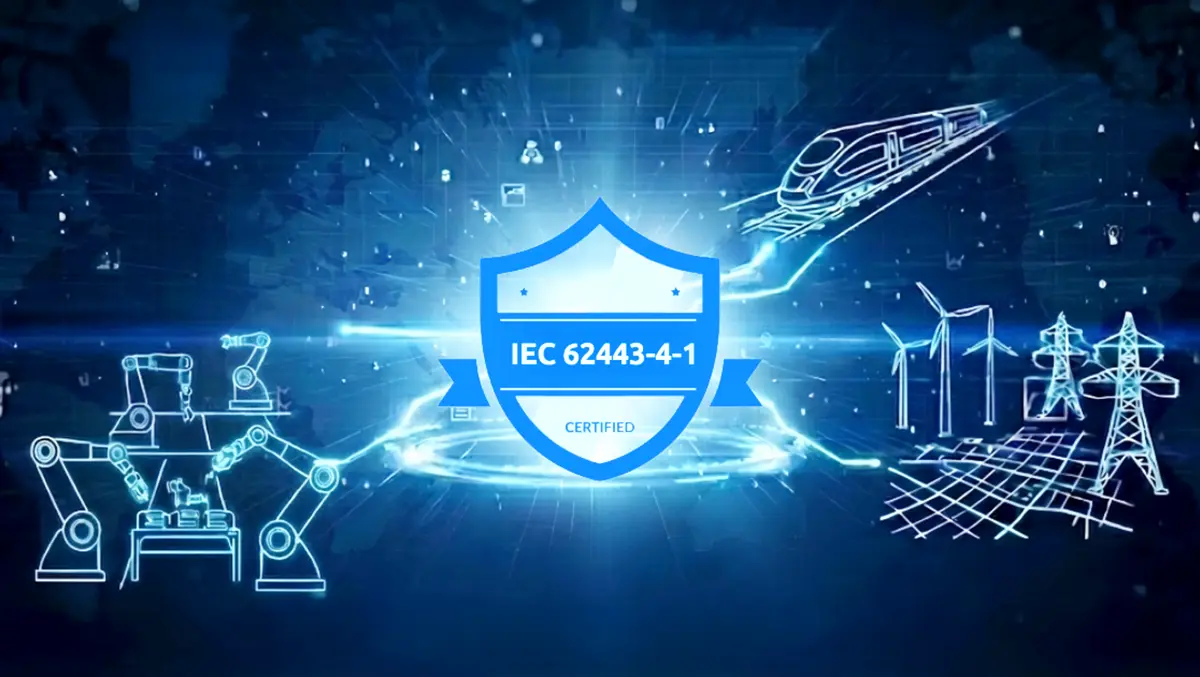

ADLINK has secured IEC 62443-4-1 certification, a cybersecurity standard used in industrial control systems, and said the accreditation formalises a secure engineering framework across its product development lifecycle.
The certification validates that the company operates an auditable and repeatable Secure Product Development Lifecycle. ADLINK framed the move as part of its approach to secure-by-design development for industrial edge computing products used in operational technology environments.
Security focus
Industrial operators have expanded the use of Industrial IoT and edge AI in settings such as factories, transport networks, and utilities. According to ADLINK, cyber threats have increasingly moved beyond conventional IT systems into operational technology.
Downtime was also highlighted as a major cost factor in industrial environments. The company said security practices need to sit inside engineering work from early product stages, rather than appearing later as patches.
IEC 62443-4-1 focuses on the processes used to design and develop products for industrial automation and control systems. The standard centres on secure product development practices rather than external assessments of a product's security posture alone.
The certification indicates that security practices have been institutionalised across several phases of the development lifecycle. ADLINK listed security requirements definition, architecture and design, secure implementation guidelines, and verification and validation as part of the scope.
It also pointed to defect and vulnerability management, patch and release governance, and product lifecycle and end-of-life management. Independent verification of these practices forms part of the value of the standard, the company said.
Customer impact
ADLINK set out several expected outcomes for partners and customers that use its modules or systems in larger deployments. Certified processes were described as reducing integration risk in supply chains and aligning development practices with cybersecurity compliance expectations.
The company also linked the certification to deployment planning for critical infrastructure projects. Products developed under a certified SDL process can streamline customers' own system-level cybersecurity qualification efforts, including IEC 62443-3-3.
Example sectors facing such qualification requirements include smart manufacturing, rail transportation, and power grids, where cybersecurity assessments can influence deployment timelines.
The certification was also linked to long-term maintenance commitments. ADLINK referenced standardised PSIRT mechanisms, which it described as structures for incident response and remediation over a product's lifecycle.
R&D changes
The certification reflects changes across internal functions, including R&D, testing, quality, supply chain, and lifecycle maintenance, according to the company.
ADLINK positions itself in industrial computing, embedded platforms, and edge AI systems. Its products serve manufacturing, transportation, energy, and other industrial domains.
The company is listed in Taiwan under stock code 6166. It operates globally and serves more than 1,600 customers.
ADLINK is a subsidiary of Intel and describes itself as a partner of Nvidia, AWS, and SAS.
The company participates in the Intel Advisory Board, the ROS 2 Technical Steering Committee, and the Autoware Open Source Foundation. It also contributes to more than 24 standards and specifications in open-source technology, robotics, autonomy, the Internet of Things, and 5G.
ADLINK employs more than 1,700 people and works with more than 200 partners. It has operated for 30 years.
The company did not name specific products covered by the IEC 62443-4-1 certification. It positioned the accreditation as applying to its secure engineering framework and the processes used to develop industrial edge computing systems for environments where cyber resilience and lifecycle security maintenance influence procurement decisions.