Google backs NZ subsea cable project to drive $36b of AI benefit for kiwis
Wed, 8th Oct 2025
Artificial intelligence could contribute an estimated NZD $36 billion to New Zealand's economy, according to new research, as Google announces developments in digital infrastructure and partnerships set to enhance the country's connectivity and technology adoption.
Economic boost
The research, conducted by Public First and commissioned by Google, suggests that AI has the potential to deliver a ten per cent productivity increase, with benefits expected to be felt across sectors including healthcare, education, and financial services. The projected value is comparable to the gross domestic product of the entire Waikato region.
Caroline Rainsford, Country Director of Google New Zealand, outlined the role AI could play for New Zealand:
"AI could help to build a safer, healthier, and more productive Aotearoa, benefiting all New Zealanders. There are some clear pathways New Zealand must take to maximise the benefits of AI for society - widespread AI literacy and business leadership and public/private partnership are three areas of opportunity. With two decades on the ground in New Zealand, Google is proud to play a role in ensuring all Kiwis have access to the knowledge and tools needed to participate in this latest transformation."
Subsea cable investment
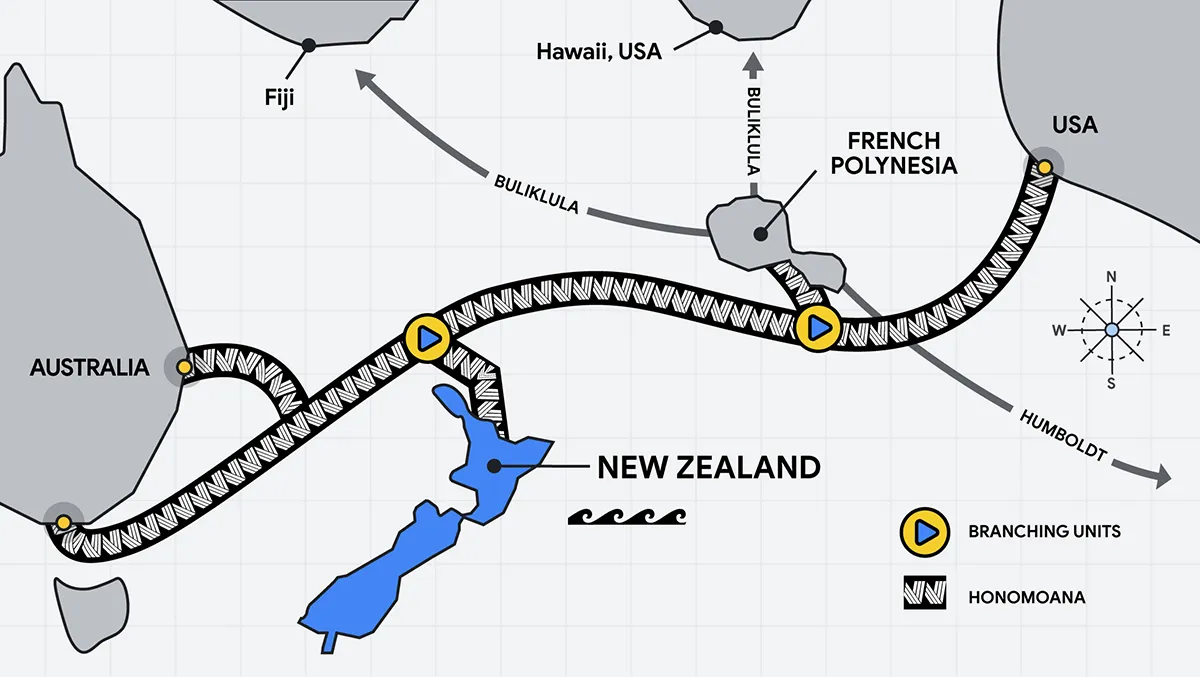
As part of its local investment, Google is progressing with the Honomoana subsea cable project, which is now at an advanced stage of construction. The cable is scheduled to land in North Auckland in early 2026 and is expected to reinforce New Zealand's digital resilience, increase bandwidth, and extend the country's reach across the Pacific region.
Once operational, Honomoana will offer the first direct connection between New Zealand and Melbourne, and will also connect New Zealand with Polynesia and, via Chile, the first Southern Pacific route to South America. Connections will be integrated into the Pacific Connect Initiative, a trans-Pacific subsea network that includes links to Fiji and French Polynesia.
Brian Quigley, Vice President of Global Network Infrastructure at Google, observed:
"We have been investing in AI research, tools, and infrastructure for two decades because it's the most profound way we can deliver on our mission - and ensure the digital divide doesn't become the AI divide. We are excited to collaborate with Kiwi partners to bring the Honomoana subsea cable to New Zealand, enhancing the reach, reliability, and resiliency of digital access in Aotearoa and across the Indo-Pacific region."
Google is working with local partners including EonFibre and CDC Data Centres on the cable's rollout, and is engaging with local communities, iwi, and government throughout the development process.
Richard Mooney, CEO of EonFibre, stated:
"We're delighted to collaborate with Google to construct the new fiber infrastructure required for the Honomoana cable. This new subsea cable will bolster New Zealand's digital infrastructure foundations and further strengthen our country's connectivity beyond its shores, which is vital for us to harness the economic opportunities presented by AI and cloud computing adoption."
CDC Data Centres' Managing Director in New Zealand, Andrew Kirker, commented on the sector-wide implications:
"We are delighted to support 'Honomoana' and be the landing point for the submarine cable across the Pacific into New Zealand. Much like CDC's data centres, this cable is a key piece of infrastructure and another essential component of our digital ecosystem. Together, submarine cables and data centres create the digital superhighways that connect the world and enable seamless connectivity and digital services. This new connection further positions New Zealand to capture the billions of dollars in economic and productivity value from advancements in cloud, AI and advanced computing. It has been a privilege for the CDC team to collaborate with Google on this significant project."
Support for business and skills
Google is also supporting New Zealand businesses seeking to expand with its AI models and purpose-built AI chips. Company estimates indicate that Google's AI-powered products helped enable economic activity worth NZD $8.8 billion for businesses across the country in 2024.
Starboard Maritime Intelligence, which provides data intelligence for maritime security and safety, has built its platform on Google Cloud. Trent Fulcher, CEO of Starboard, said:
"Working with Google Cloud gives us the ability to share actionable maritime intelligence securely across environments where interoperability is critical. That means frontline teams and analysts can access the same data faster and make better-informed decisions without compromising security."
Community programmes
Google.org has also announced support for new programmes designed to help New Zealanders adapt to an AI-focused future. These initiatives include the Experience AI programme, co-developed by Google Deepmind and delivered locally with partners such as Tōnui Collab, which aims to familiarise students aged 11 to 14 with AI and machine learning concepts.
Other programmes include the Asia-Pacific Digital Transformation Programmeme, where Netsafe will collaborate with Tribal Aotearoa NZ to develop an AI tool designed to alert users to scams and fraudulent websites, and the AI Opportunity Fund, which supports adult AI literacy through Adult Waitakere Litreacy.