

New Zealand tech leaders urged to donate used laptops
Thu, 26th Nov 2026 (Today)
Recycle A Device has urged New Zealand technology leaders to donate retired business laptops to its refurbishment programme, as requests from students and families continue to outstrip the number of devices available.
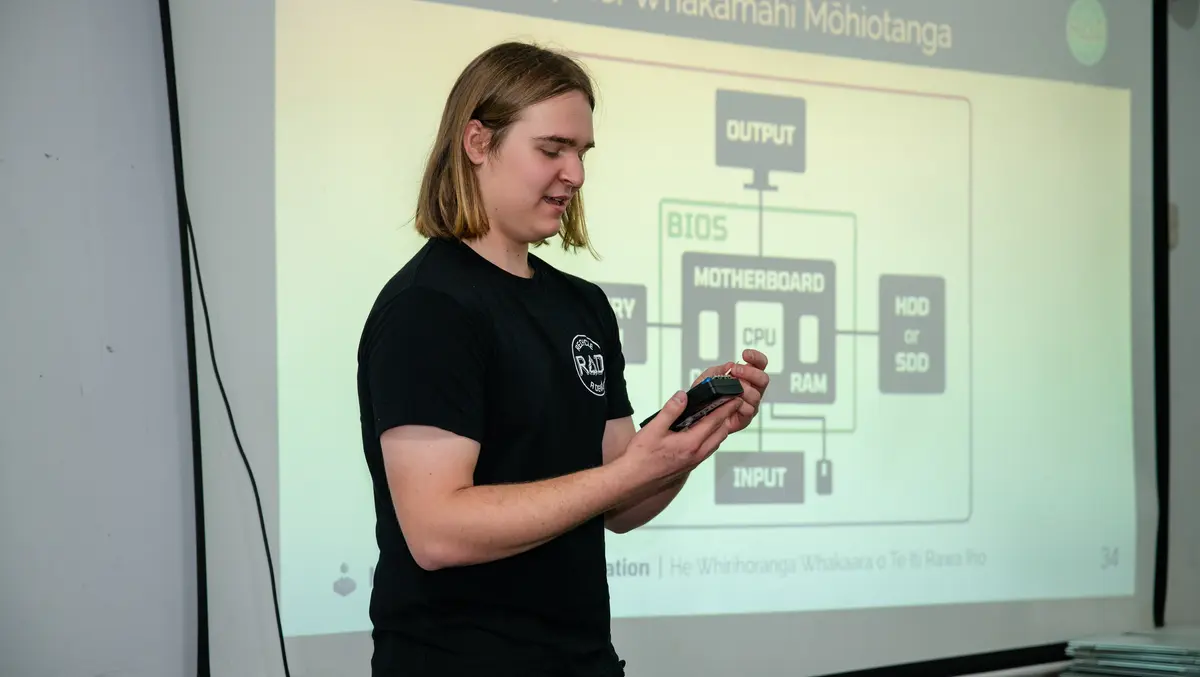
Run by the charity Digital Future Aotearoa, the programme collects used corporate laptops, wipes their data and sends them to school and community-based RAD Clubs. There, young people diagnose, repair and refresh the machines before they are given to people in their local area.
The model has operated since 2020 and has now returned more than 10,000 laptops to users across New Zealand. In 2025, the scheme gifted 2,585 laptops, involved 432 young people in STEM learning, diverted 4.2 tonnes of e-waste and avoided 509 tonnes of CO2e emissions.
Demand for devices is rising as more schoolwork and assessments move online and households face tighter budgets. The charity also pointed to higher prices for new laptops this year, linking the increase to a global shortage of computer memory driven by AI demand.
More than one million New Zealanders still lack the tools needed to participate fully in the digital world, according to Digital Future Aotearoa. That can mean access to a device, an internet connection or the digital skills needed to use online services with confidence.
Rising pressure
The pressure is especially visible in education. NZQA has adopted a digital-first approach to NCEA assessment, while teachers have raised concerns that students without a computer at home cannot practise for online literacy and numeracy tests.
RNZ has reported that the numeracy pass rate for students from the poorest third of schools is 38%, less than half the rate for students from the richest third. Against that backdrop, access to a working laptop at home is becoming increasingly important for participation in school.
Early figures from the charity's 2026 impact reporting also suggest growing engagement among the students who help refurbish the laptops. It said 56% of refurbishers now report that they are considering a career in technology, up from 42% in 2025.
"Every laptop sitting in a storeroom or heading for disposal is a missed opportunity," said Kelsey Hallahan, Programme Manager, Digital Future Aotearoa. "When a business donates its old fleet to RAD, that one decision does three jobs at once. A young person gets a device they need, another young person learns real technical skills fixing it, and a working machine stays out of landfill. Tech leaders are perfectly placed to make that happen at scale."
Donation case
The organisation is targeting Chief Information Officers, IT managers and sustainability teams, arguing that existing fleet replacement cycles offer a route to redirect usable hardware. Many employers are already reviewing equipment as they work through upgrades linked to the end of Windows 10 support.
Devices donated to the programme are sanitised by Entelar Group using Blackbelt Enterprise before being sent to RAD Clubs. Donors receive a wiping certificate once the process is complete.
The model also gives companies figures for sustainability reporting, including e-waste diverted and emissions avoided. The local club structure means donated machines are refurbished and redistributed within the communities where they are needed.
The programme's roots go back to 2017, when two students began fixing laptops at Aotea College in Porirua. Since then, it has grown into a national network spanning schools and community groups.
RAD accepts laptops rather than tablets or phones, and says devices should be less than 10 years old and supplied with their chargers. Batteries must be secure, and any signs of damage, swelling or overheating should be disclosed.
"Digital equity is something the tech sector is uniquely able to influence," said Kris Dempster-Rivett, General Manager, Digital Future Aotearoa. "The industry built the digital world we all rely on, and it has the hardware, skills and influence to make sure everyone can take part in it. We're asking tech leaders to commit their used laptops to RAD and to make digital equity part of their sustainability and CSR strategies."