

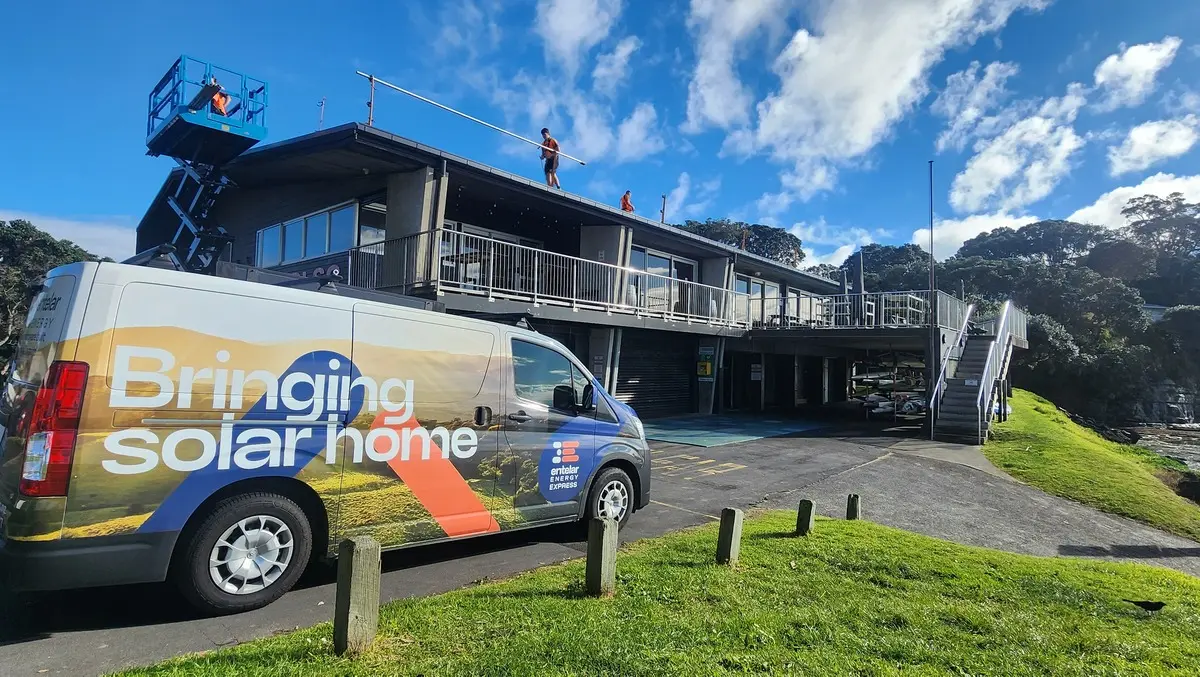
Red Beach surf club gets solar boost to cut power bills
Tue, 6th Oct 2026.webp)
Entelar Energy and Trilect Solar have completed a solar installation at Red Beach Surf Life Saving Club, with the system expected to cut the club's power bill by more than NZD $9,000 a year.
Red Beach Surf Life Saving Club has operated on Auckland's Hibiscus Coast for 73 years, but rising electricity costs had been putting pressure on the volunteer-run organisation's budget. According to those involved in the project, those costs were drawing funds away from patrols, training, equipment and community support.
The installation was delivered through a structured community partnership after the club found it was not realistic to fund a solar system on its own. Entelar Energy and Trilect Solar contributed equipment, technical expertise and delivery support to make the project possible.
The completed system includes a 43.68kW DC solar photovoltaic array and an Entelar Energy 29.9kW three-phase Smart String Inverter. It also features 96 solar panels designed for coastal conditions, certified for use in highly corrosive environments and backed by a 30-year warranty.
Trilect Solar completed the installation in four days with virtually no disruption to the club's day-to-day operations.
Energy savings
The system is forecast to generate about 56MWh of electricity a year, saving the club NZD $9,338 annually and reducing long-term operating costs for the not-for-profit organisation.
The cited environmental benefits include the equivalent of avoiding 19,100kg of coal or 16,806 litres of petrol each year. The organisations said that was also comparable to planting 1,012 trees annually.
Laura Dewar, Energy Lead at Entelar Energy, said the community element was central to the company's involvement.
"We jumped at the chance to be involved," Dewar said.
"As a New Zealand business, community projects where we can create real, lasting value are an important part of who we are."
Site assessment
Before installation, Trilect Solar assessed the club's electricity use based on a year of energy data to identify a system suited to its demand profile and financial position.
"We carried out a detailed assessment of the club using 12 months of energy data to identify the solution that would optimise performance, maximise self-consumption and deliver the best financial outcome," said Peter McInally, Owner at Trilect Solar.
For the surf club, the project addresses an operating issue common to many volunteer-run community organisations, where utility costs compete with frontline spending. Club Manager Ange Moore said the installation gives the organisation greater certainty over one of its regular overheads.
"The process was seamless, and we were barely aware they were there," Moore said.
"For a volunteer-run organisation, finding ways to manage rising operating costs while continuing to invest in surf lifesaving services is always a challenge. This project is an investment in the long-term sustainability of our club, giving us greater certainty around energy costs and allowing us to focus more of our resources on keeping people safe and supporting our community."
The project also adds to growing use of solar generation by community facilities looking to limit exposure to rising grid electricity costs. In this case, the installation was tailored for a coastal site, where salt exposure and weather conditions can affect equipment choice and durability.
Entelar Energy is part of the Entelar Group, a wholly owned subsidiary of Spark NZ, while Trilect Solar is a New Zealand-owned solar design and installation business. The companies said the Red Beach project shows how commercial suppliers and local organisations can share costs and expertise on community infrastructure.
"This project shows what is possible when organisations work together around a shared purpose," Dewar said.
"The partnership with Red Beach Surf Lifesaving Club demonstrates how community infrastructure can become more sustainable, cost-effective and resilient through the right energy partnerships."