Power usage effectiveness (PUE) stories
A Scottish facility shows operators can cut water use to near zero while still supporting AI workloads and high rack densities.
Traditional data centre designs are being overtaken as AI clusters push rack loads to 50-100kW and demand liquid cooling, faster builds and more power.
Racks are already pushing 50-100kW, forcing operators to redesign cooling, power and build methods for AI workloads.
The move could reshape how operators prove sustainability as AI-fuelled demand pushes data centre energy and water use higher.
The software could help AI data centres cut energy and water use while keeping hotter, denser GPU racks within safe operating limits.
Rising AI power demand and grid delays are pushing operators to upgrade electrical systems as the market is forecast to reach USD $107.06 billion by 2034.
Asia Pacific data centre operators are under pressure to add capacity without sacrificing uptime, efficiency or decarbonisation goals as AI demand surges.
Auckland businesses will gain more colocation capacity next year, as the New Zealand-owned operator adds a second site on the North Shore.
The Waterford firm will gain access to hyperscalers and investors as it seeks to scale its waste-heat-powered carbon capture technology.
Spain's weather forecasts will be backed by faster computing and lower energy use as AEMET upgrades systems under a four-year deal.
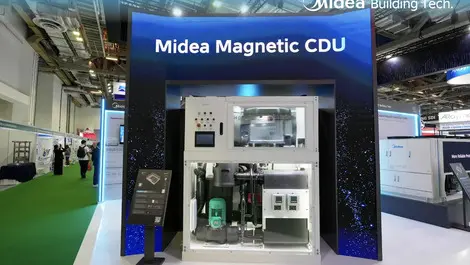
Data centre operators can now mix air and liquid cooling in one unit as AI workloads push rack densities higher across facilities.
The architecture is aimed at AI-driven data centre builds, promising to reserve up to 90% of provisioned electrical capacity for servers rather than cooling.
Data centre operators could free up more power for servers as the new architecture is designed to direct up to 90% of provisioned capacity to IT compute.
The new site adds 8 MW of capacity and 1,550 cabinets as Singapore faces tighter limits on land and energy use amid AI-driven demand.
The reuse project boosts AI capacity by 275% inside the original building footprint, while cutting structural upfront carbon and water use.
Operators in Southeast Asia could speed AI capacity builds as Delta's modular system pairs liquid cooling with 800 VDC power for NVIDIA Vera Rubin.
Operators under pressure to curb AI-driven power and water use will see Danfoss pitch cooling kit aimed at cleaner, more reliable data centres.
Rising data centre demand is pushing Legrand to expand in Malaysia, Indonesia, Thailand and Vietnam as Singapore shifts towards retrofits.
Rising AI server densities are forcing Asia-Pacific data centre operators to rethink cooling as water use and power demand tighten.
Growing datacentre fleets could face less downtime as Vaisala bundles calibration, support and replacement probes into a single service package.