

Ardern's infrastructure legacy wins cross-party backing
Mon, 14th Sep 2026
We can only hope that the mutual support for the National Infrastructure Plan by the two major political parties means that times-up for pork-barrel, partisan politics, reactive infrastructure policies and diversion of assigned maintenance funds.
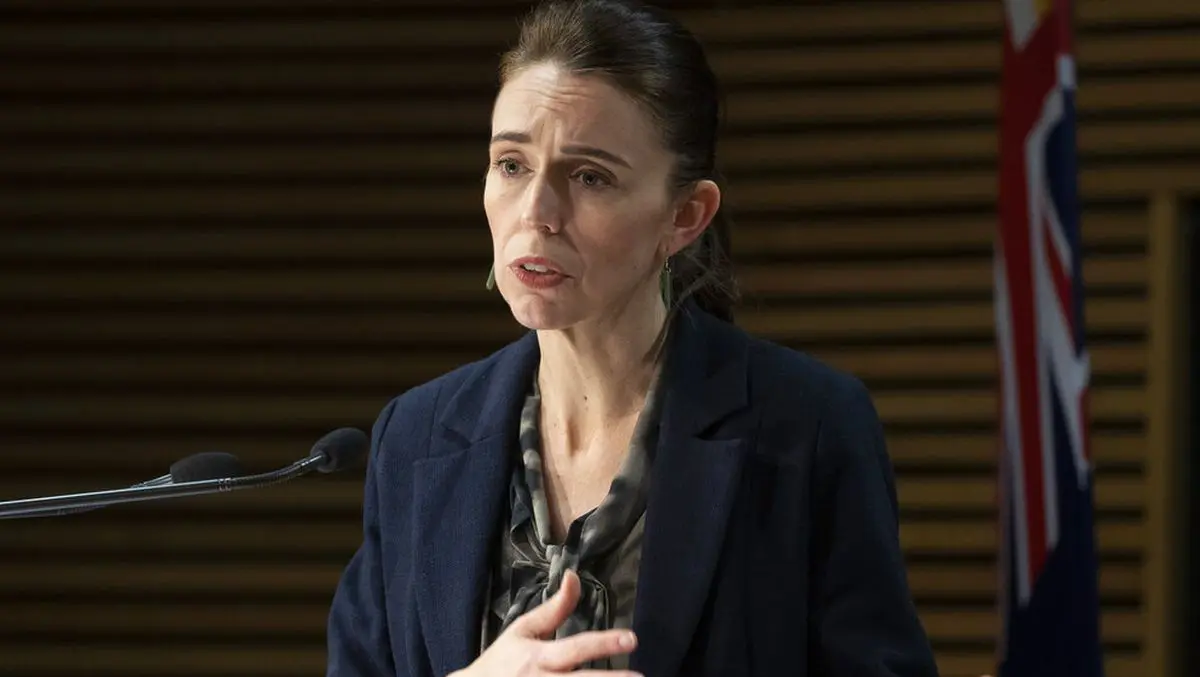
Former Prime Minister Jacinda Ardern is credited with kick-starting, during Covid, the renaissance of big infrastructure by declaring the absolute need for protected, long-term investment.
It was no mean effort to pull it off in a country where an outmoded three-year election cycle renders anything that cannot show immediate voter benefit a waste of political effort.
The Labour Party coalition introduced at the end of January 2020 a well-intentioned $12 billion New Zealand Upgrade Programme (NZUP) for infrastructure.
A $3 billion Shovel-Ready Programme (SRP) involving 177 regional projects from almost 2000 applications came aboard in April the same year following the first COVID-19 Alert Level 4 lockdown.
SRP was designed to fast-track construction projects to keep the economy kicking in the pandemic but suffered from a lack of effective oversight in a programme inevitably flawed by the speed with which it was put together.
The controversial Three Waters Reform Programme followed, only to be replaced in February 2024 by a new government.
Leading from the front
Ardern's bold moves may have been motivated by the pandemic, but it was classic Keynesian economic policies which had been employed successfully in the great depression, World War II and for decades later, by many advanced economies.
It fell from fashion in some Western economies in the late 1970s and early 1980s. The political rise of Margaret Thatcher in the UK and Ronald Reagan in the USA ushered in a new era of neoliberalism focused on deregulation, tax cuts and free-market capitalism.
Ardern's legacy
Important though the infrastructure pipeline she created was, Ardern's principal legacy was not reliant on economic models or new projects.
History will record her greatest contribution to infrastructure as the creation of the New Zealand Infrastructure Commission, announced in February 2020 as an Autonomous Crown Entity and a board of impressive infrastructure experts to run it.
The creation of the autonomous body was a pivotal decision and has resulted in a sea change to mainstream government and opposition thinking, albeit slower in coming forward than hoped for and, stubbornly, still election driven and prone to choosing favoured projects for favoured districts over essential needs.
That on-again off-again attitude to infrastructure party favourites had cost the country at least $2.5 billion over 20 years, according to the NZIC pipeline report released in December 2025. Adding salt to the wound, maintenance provisions were routinely switched to fund regional vote-winning new projects, NZIC said.
The pandemic was an extraordinary time in history globally and Ardern was dubbed the Prime Minister of "many firsts". Her standing grew internationally after addressing the United Nations general assembly and soared domestically as she guided the country through Covid 19 with a world-leading lack of fatalities.
NZIC sparks agreement
A non-partisan commitment to the 30-year National Infrastructure Plan by the two major political parties came in mid-2026 and appears to be holding up.
They had already voted together for the India Free Trade Agreement after NZ First denied support and have agreed to an upcoming mutual agreement for a conditional Modern Slavery Bill initiative, the Social Media Ban for Under-16s and the proposed legislation to cap council rates through its first reading.
Successive governments had routinely announced massive, headline-grabbing infrastructure projects in election years before establishing whether they are actually affordable, deliverable or strategically viable," the NZIC said.
The Commission highlighted that 50 percent of the large projects seeking funding through the central government's annual budget lacked proper business cases, if any at all, to demonstrate that they were actually ready to fund.
Between 2010 and 2020, New Zealand was actually the single largest infrastructure spender among advanced nations relative to the size of its economy.
The country invested an average of 5.8 percent of its GDP annually on public infrastructure. This put New Zealand in the top 10 percent of OECD countries for spending, but it remained stuck in the bottom 10 percent in getting for "bang for buck", according to NZIC.

Former Auditor General John Ryan
Management and transparency
On the surface, it was a sound rationale for Ardern's long-term investment in 2020 on its own. The government also had been alerted by the Auditor General in 2019 about worsening economic conditions. The need for the projects and economic stimulus was never in question.
It wasn't until the next election results were out in December 2023 that highly respected former Auditor General John Ryan (Public Sector Integrity Framework 2022) raised the alarm about the lack of underlying diligence in SRP and NZUP.
"The public has a right to expect more," Ryan said putting the incoming National government coalition on notice as much as anything, while recognising the extraordinary circumstances created by Covid.
Ryan lambasted not the projects themselves but not the management and transparency of Ardern's $15 billion infrastructure spend-up, saying the government should have ensured better transparency and value for money.
He said the smaller SRP had a "largely well-run process" but good reporting on its delivery was "let down by the absence of clear records and a rationale of how and why some decisions were made by ministers".
Costs for some programmes in the SRP had since increased significantly, leading in some cases to delays or rescoping, he said.
Full business cases were not always available or up to date, even when the project's planning was more advanced, he said. "A lack of transparency and documentation about how and why decision-makers made significant decisions can also create the perception that processes lack integrity."
The releases highlighted decades of poisonous partisan politics. The auditor-general told Radio New Zealand his concerns echoed similar findings on similar schemes like the Strategic Tourism Assets Protection Programme, the Cost-of-Living Payment, the Provincial Growth Fund (PGF) and the reprioritisation of the PGF.
The blame game
It has taken until this year (2026) to get the need for non-partisan support for long-term programmes properly recognised and agreed by the two major parties.
Cynics say they are spooked by the increasing powers of their coalition parties and the election year, as much as any recognition that they had done badly for decades when it came to infrastructure fulfilment.
That may be true, but reality is making it harder and harder to shove infrastructure failures under the parliamentary carpet. Century-old waste-water facility collapses highlighted by Wellington's decades-long under-investment in, or diversion of, maintenance funding and the leaky homes saga which embroiled local and national governments in billion-dollar contingencies are just two examples.
Coalition partner Shane Jones was king and Minister for Infrastructure/Minister for Regional Economic Development in the first term of the Labour-led coalition, although finance approvals still had to pass through the Infrastructure Reference Group which included the Minister of Finance Grant Robertson, the Minister for Infrastructure Jones and Associate Ministers of Finance.
Jones immediately disavowed any culpability for claims in Ryan's report, laying blame on then deputy prime minister and finance minister Grant Robertson who controlled Infrastructure for most of the second term of the Labour Party. "I can't be held responsible," Jones told reporters. "Grant Robertson was there for three years."
Robertson was more gracious, acknowledging and thanking the Auditor-General for the 70-page report. "The [Labour] party accepted all recommendations directed at improving future public investment processes."
He noted the report had acknowledged the government's need to move quickly in the face of economic uncertainty. "At times like this it will not always be possible to run a full or conventional process," he said.
The incoming National Party retained the vociferous Jones as Minister for Oceans and Fisheries, Minister for Regional Development, Minister for Resources, Associate Minister of Finance and Associate Minister for Energy.
The Ardern era
The reign of Dame Jacinda Kate Laurell Ardern began when she was made leader of the Labour Party just seven weeks ahead of the 2017 elections.
The five years she was prime minister from 2018 to the beginning of 2023 was an extraordinary and unprecedented time for New Zealand and global history.
Barely a year into her term, she was confronted with and stepped up to guide a stunned country after a terrorist attacked worshippers at a Christchurch mosque in early 2019 taking 51 lives, followed months later by the White Island eruption which claimed 22 more.
The year before (mid-2018) she fitted a baby into her schedule.
Ardern also mothered the country through the acute response phases of Covid 19 between 2020-2022, including a programme to avoid an economic Armageddon with the introduction of the three major infrastructure projects in 2020.
But the bloom was off the rose in Ardern's second term with a rising cost of living and concerns that the government's focus on health measures had overshadowed an effective economic recovery.
She resigned as prime minister on 25 January 2023 citing burnout. It was more notice than she herself received ahead of the 2017 elections and allowed enough time for her successor Chris Hipkins to establish himself ahead of the elections later in the year. "I no longer had enough in the tank," she said.
The Labour Party lost the 2023 elections in a Churchillian-like backlash but the country and overseas countries generally retained the highest regard for Ardern's leadership.
Ironically, the current election is being fought on exactly the same issues as the last except the complaint now is that health issues are not getting enough attention.
If nothing else, it confirms the fickle nature of New Zealand voters in a three-year parliamentary cycle and goes a long way to explain the short-term thinking of all players in the political spectrum.