

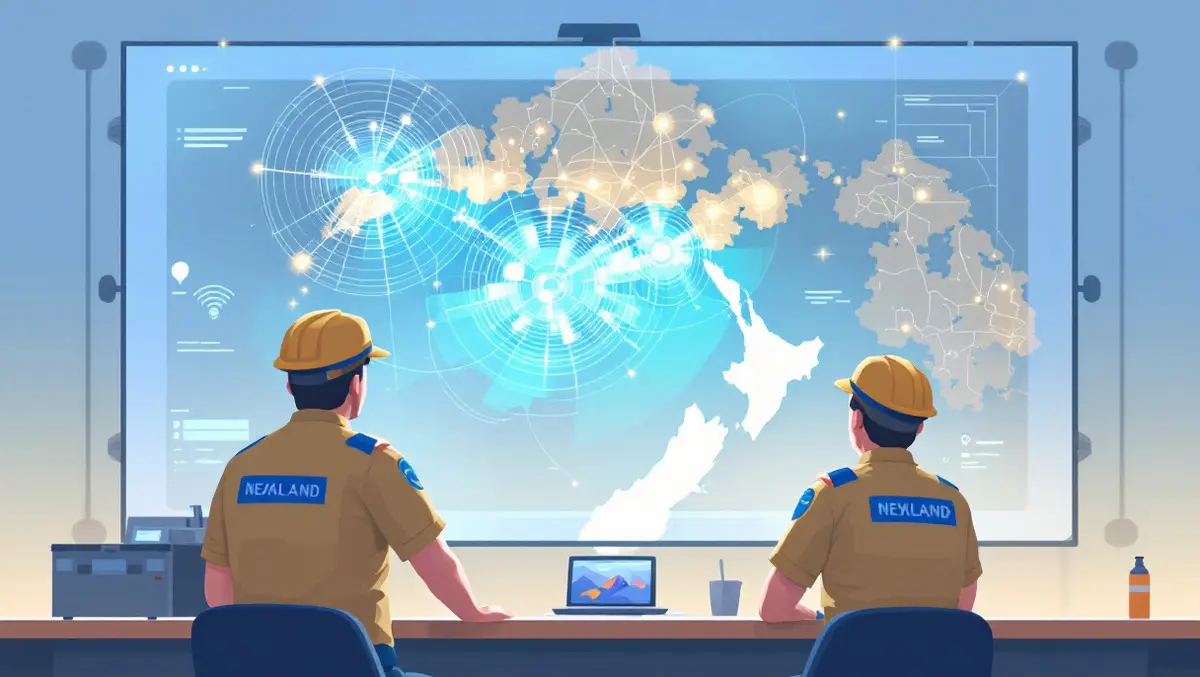
New service boosts network visibility for emergency services
Thu, 18th Sep 2025
A new service providing emergency services with real-time and projected visibility of cellular network coverage has been launched by Next Generation Critical Communications.
The Public Safety Network Cellular Network Visibility Service (NVS), developed for the government's public safety agencies, is designed to help emergency organisations plan operations by providing data on network availability from One NZ and Spark.
Emergency access
Personnel from New Zealand Police, Fire and Emergency New Zealand, Hato Hone St John, and Wellington Free Ambulance will be the first to receive access to the service. The initiative gathers and consolidates network information from both Spark and One NZ into a single digital interface, enabling the users to see both current status and predicted future outages up to two weeks in advance.
Development of the NVS was undertaken by Hourua, a joint venture between Spark and One NZ, specifically for NGCC. The tool combines real-time network data, predicted outages, and scheduled maintenance information, aiming to provide a single reliable source of truth for emergency communication teams.
Operational decision-making
"Having near real-time visibility of Spark and One NZ's cellular network status across the country is a game-changer for emergency services and will help them plan effective and safe operations with confidence," says NGCC Director Steve Ferguson.
The NVS system offers a significant advantage in operational planning by displaying not only the areas with strong coverage but also those where services may be limited or disrupted. This information is expected to aid responses to both routine incidents and unexpected large-scale emergencies.
"The Network Visibility Service gives our emergency services a clear view of where coverage is strong, and where it might be impacted, so they can make decisions when responding to emergencies, including large scale events like Cyclone Gabrielle, or planning future operations," Mr Ferguson continued.
Platform and functionality
The service is built on the ArcGIS platform, which is a geographic information system from Environmental Systems Research Institute (Esri). The cloud-based infrastructure means that authorised emergency services staff can access the platform from any computer with internet connectivity. This approach supports distributed teams during both ordinary shifts and extraordinary events.
The inclusion of future outage and maintenance schedules is intended to allow for more precise planning ahead of known disruptions, reducing the risk of unexpected communication failures during major operations. Consolidating this information in one system is aimed at minimising delays and confusion for first responders.
The new service will form one part of the broader Public Safety Network, known as Te Kupenga Marutau, which is a project to invest NZD $1.4 billion over a decade into critical communications infrastructure. The PSN project comprises digital land mobile radio, cellular services such as the NVS, and personal alerting systems, all planned to strengthen response capability for emergency workers.
Implementation and outcomes
NGCC has stated that this new service is the third PSN Cellular Service provided to them by Hourua, arriving within agreed timelines and budgets. NGCC believes the expanding coverage and capability of these services is offering essential support for field personnel reliant on mobile technology.
"This is the third PSN Cellular Service delivered to us by Spark and One NZ's joint venture Hourua on time and on budget. Together, it's great to have already provided a significant uplift in cellular capability for the people who rely on their phones and mobile devices to do their jobs and keep us all safe," Mr Ferguson said.
The Public Safety Network offers a centralised, secure, and resilient communications system, and emergency service agencies are the first to benefit from these improvements. There is potential for additional public safety organisations to join the network and for future services to be added as needs evolve.