


Young people say AI is eroding trust online, report finds
Tue, 13th Oct 2026 (Today)
Te Rourou has published research showing that young people in Aotearoa see internet access as essential to daily life. It also found that artificial intelligence is making it harder for many rangatahi to trust what they see online.
The research, carried out with Brainbox Institute and youth-focused organisations, drew on discussions with 28 rangatahi, mostly aged 16 to 24, about digital inclusion in what it describes as the age of AI.
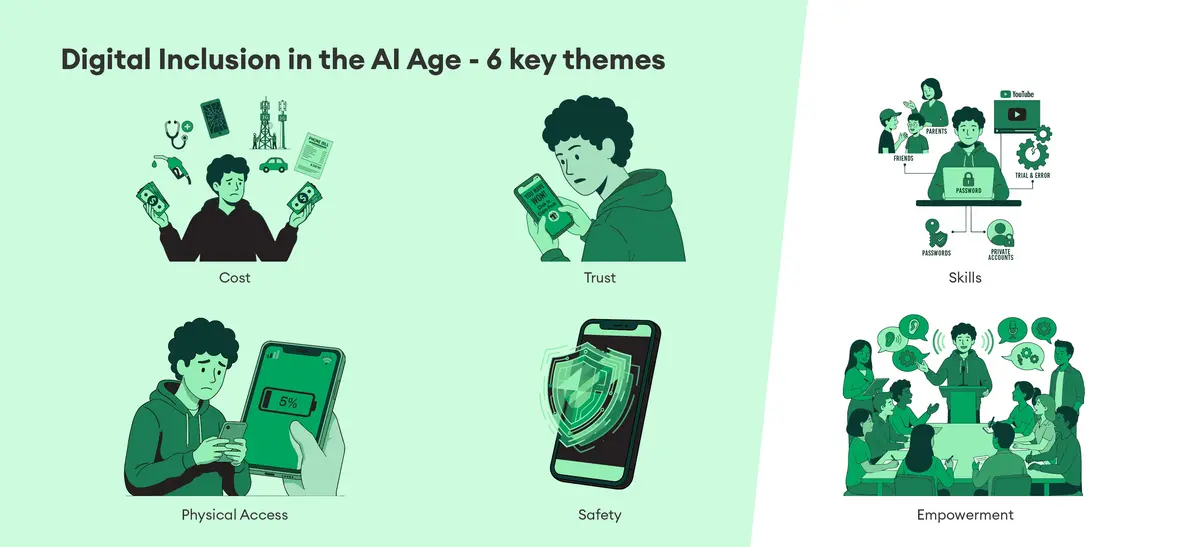
It identifies six themes shaping young people's digital lives: cost, physical access, trust, safety, skills and empowerment. Participants said internet access underpins education, employment, banking, access to services and personal interests, while helping them stay connected with whānau, friends and communities.
The report also found that device and data costs, poor connectivity and power outages still disrupt access. These problems weigh most heavily on those already facing disadvantage.
Young people also described an online environment that is increasingly difficult to navigate with confidence. They cited bullying, scams, harmful content and the effects of social media on wellbeing as concerns, while misinformation and generative AI were seen as making it harder to judge whether online material is real.
Essential access
The report sets out three priorities: treating reliable, affordable connection as essential; strengthening safety and trust in digital environments; and giving rangatahi a more direct role in shaping digital policy and practice.
According to the findings, access alone is no longer enough to define digital inclusion. The research argues that trust, skills and young people's ability to influence decisions are now part of the same issue.
"For rangatahi, being connected isn't a nice-to-have. It's how you learn, find work, manage your money, access services and, importantly, stay connected with your whānau, friends and community.
"That means we need to start treating affordable and reliable digital connection as essential. When a young person loses connectivity, they're not simply losing access to entertainment. They can lose access to education, employment, support and the people around them.
"But access is only part of the picture. AI is changing the digital world incredibly quickly and, alongside the opportunities it creates, rangatahi are telling us they're increasingly questioning what they can trust online. We need to make sure our approach to digital inclusion keeps pace, which includes considering all aspects of inclusion, including skills and empowerment," said Ezekiel Raui, Head of Te Rourou, One Aotearoa Foundation.
Raui said involving young people in decision-making was central to the other priorities identified in the study.
"We shouldn't just be designing a digital future for rangatahi - we need to build it with them.
"Rangatahi are experts in their own experiences and this research shows they have ideas, capability and a real appetite to contribute. Our job now is to create genuine opportunities for that voice to influence research, policy, technology and the decisions that shape their digital lives," Raui said.
AI and trust
The findings suggest AI is adding a new layer to existing concerns about digital inclusion. Some participants reported useful applications, including help with job applications and administrative tasks, but the overall picture was one of uncertainty about trust, learning, work and wider social effects.
Trust emerged as a recurring issue throughout the research. Participants said scams and misinformation had already made them sceptical about online interactions, and that generative AI had further increased doubts about what is authentic.
The researchers said the study also challenged assumptions that young people are passive users of technology. It found that many are already developing ways to manage risks, drawing on friends, whānau, training and personal experience.
"Rangatahi gave us a remarkably nuanced picture of their digital lives. They understand that being online brings enormous benefits, while also recognising the very real challenges around access, safety, wellbeing and trust.
"What stood out was how solutions-focused they are. Young people aren't simply waiting for adults to solve these problems for them. They're learning, adapting their behaviour and finding ways to navigate a digital environment that is constantly changing.
"They were also very clear that they want to be genuinely involved in what happens next. If we're designing policy, technology or online safety initiatives for young people, their lived experience needs to be part of that process from the beginning," said Dr Ellen Strickland, Lead Researcher at Brainbox Institute.
The report also includes comments from participants who said youth perspectives remain underrepresented in technology decision-making. One participant said "there's not a lot in the technology world that is youth-led", while another said they would like "to see more young people being authentically included in decision-making spaces."